Short deployment window
Prepare equipment and logistics for a defined operating period.
Deploy temporary EV charging for event fleets, emergency vehicles, demonstrations and short-term operating sites.
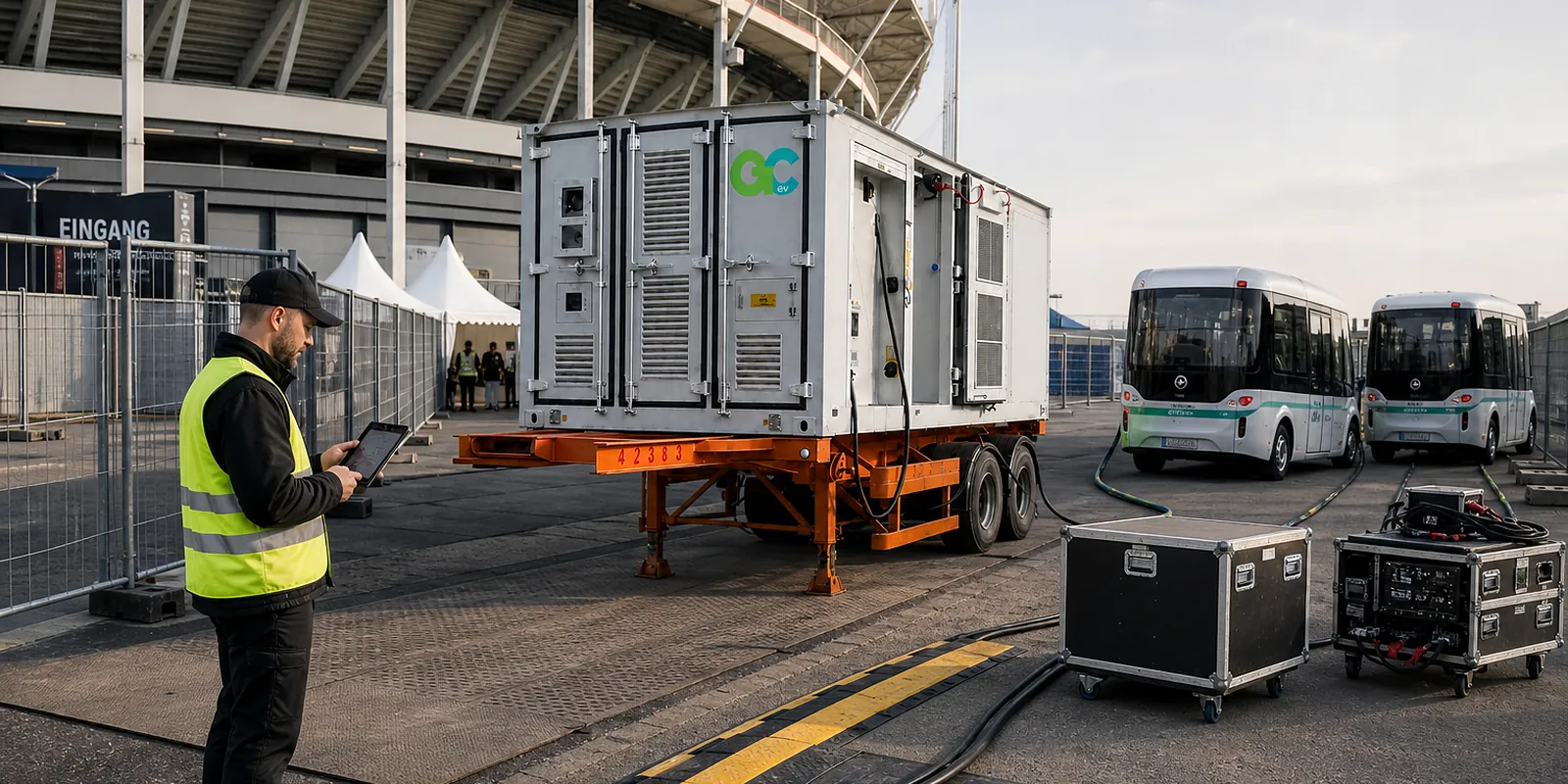
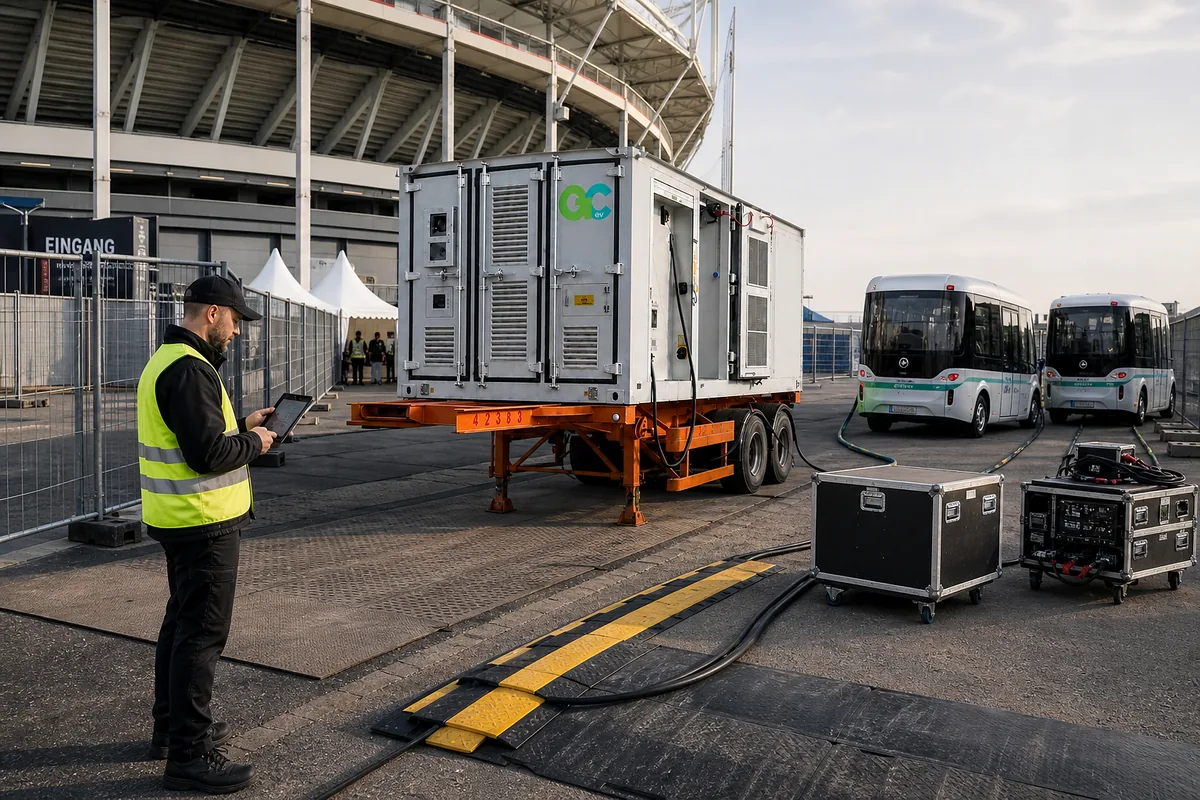
Events, emergency projects and pop-up operations can create EV charging demand at locations where permanent infrastructure is unavailable or unnecessary. Mobile battery-powered charging provides a planned source of DC energy for event vehicles, emergency fleets or demonstration programs.
This solution is specifically for EV charging rather than general event electrical backup. The deployment plan must confirm vehicle demand, operating period, access, security, weather, recharge logistics and the energy reserve required if the schedule changes.
Compare the suggested configurations in our mobile EV charger catalog, then confirm the final specification with the project engineering team.
Correct sizing depends on when vehicles charge, how much energy they need and how the mobile system itself will be recharged.
Prepare equipment and logistics for a defined operating period.
Bring DC charging to a temporary controlled location.
Maintain an energy reserve for timetable changes or emergency use.
Plan placement, cables, traffic separation and operator access.
Combine an approved recharge source, integrated battery storage, DC fast charging outputs and optional OCPP-compatible communications.
These inputs turn a broad application idea into a configuration that can be checked against the selected equipment.
Operating days, daily hours and setup or removal windows.
Battery, connector, quantity and charging priority.
Starting state of charge and where the mobile unit can recharge.
Security, weather protection, traffic flow and trained operators.
These products are starting points. Final capacity, output, cable count and connector are confirmed after the duty-cycle review.
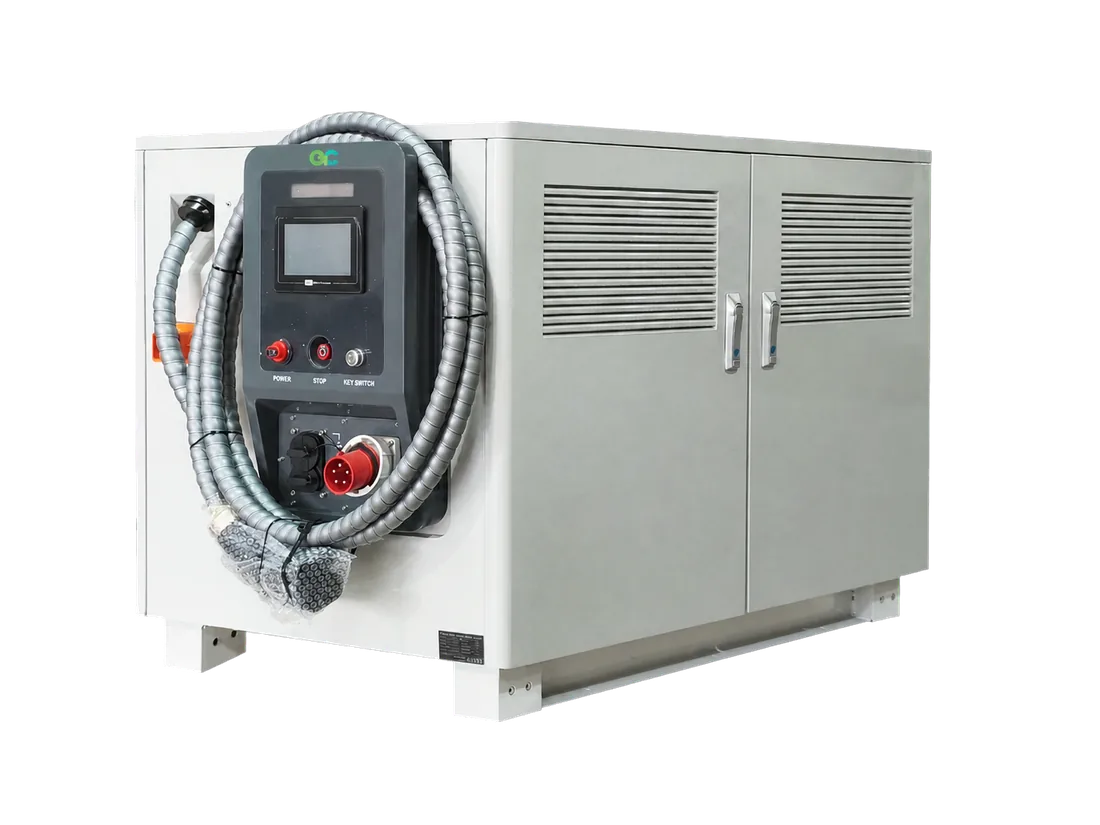
Destination market, vehicle model, connector, number of vehicles, daily energy demand and available input power allow a faster technical response.
No. This page describes battery-powered mobile EV charging for vehicles. Any auxiliary AC load requirement must be reviewed separately.
Standard products normally require about 45 days, while custom configuration and transport timing are confirmed after the project scope is approved.
Yes, if the energy budget, recharge plan, placement, security and operating procedures support the full deployment period.