No nearby charger
Deliver DC energy where towing may be avoidable or delayed.
Bring battery-powered DC charging to stranded EVs, service areas and vehicle delivery routes.
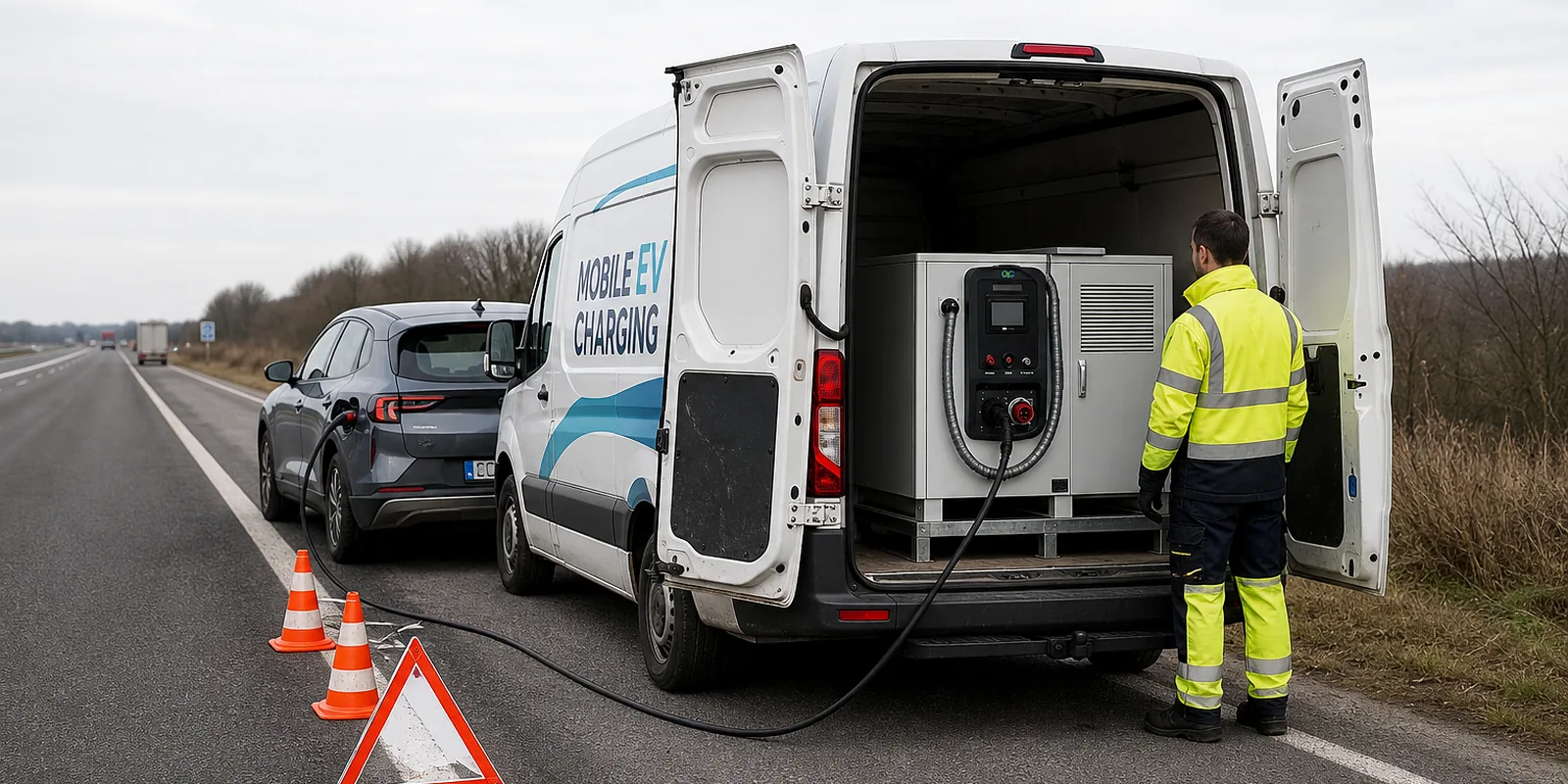
Roadside EV support usually needs enough energy to move a stranded vehicle safely to its destination or the next public charger. The equipment must fit the service workflow, travel with the response team and support the connector standards used in the destination market.
The right configuration depends on expected calls per day, energy delivered per call, service radius and where the mobile charger will recover its own battery. Compact 75 kWh and 100 kWh systems suit lighter duties, while 141 kWh configurations provide more energy or dual-output options.
Compare the suggested configurations in our mobile EV charger catalog, then confirm the final specification with the project engineering team.
Correct sizing depends on when vehicles charge, how much energy they need and how the mobile system itself will be recharged.
Deliver DC energy where towing may be avoidable or delayed.
Specify CCS1, CCS2, CHAdeMO, GB/T or NACS by market and model.
Balance stored energy, equipment footprint and service payload.
Plan a practical reserve for variable call volume and travel distance.
Combine an approved recharge source, integrated battery storage, DC fast charging outputs and optional OCPP-compatible communications.
These inputs turn a broad application idea into a configuration that can be checked against the selected equipment.
Emergency range recovery or a larger on-site charge.
Expected service count and energy delivered at each stop.
Truck, van, trailer or standalone deployment method.
Where and how the mobile unit is replenished between shifts.
These products are starting points. Final capacity, output, cable count and connector are confirmed after the duty-cycle review.
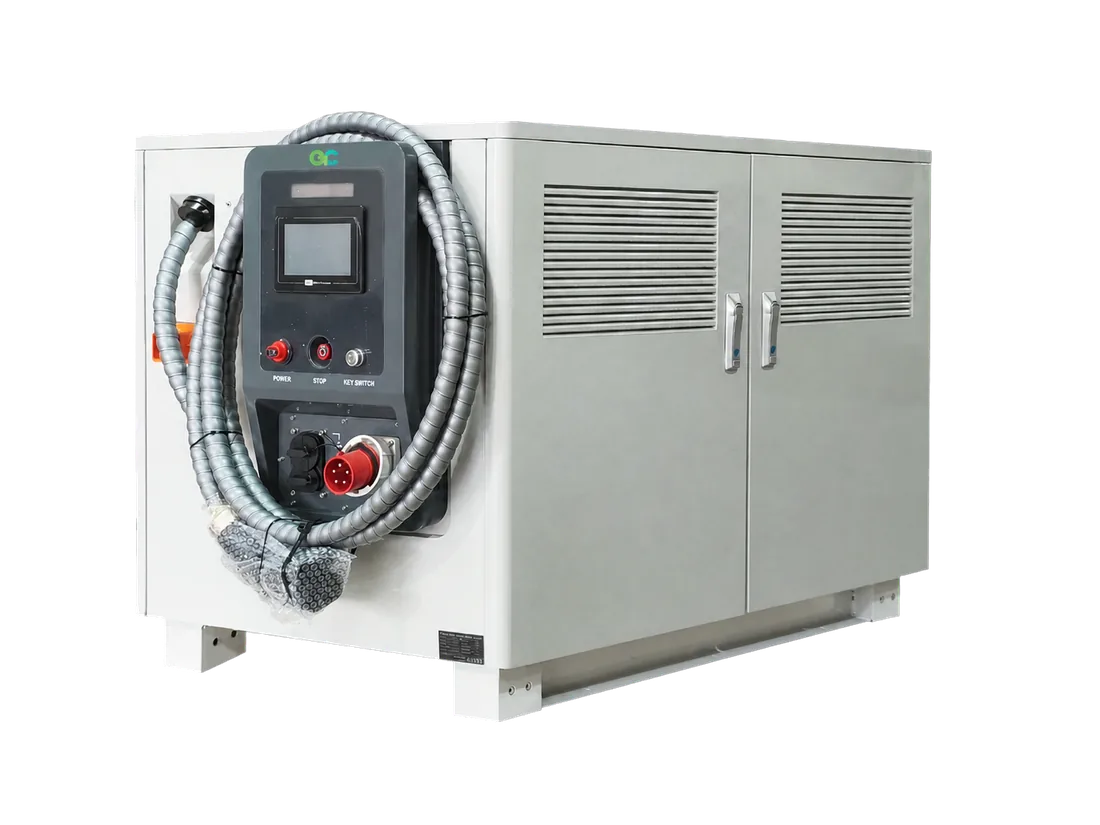
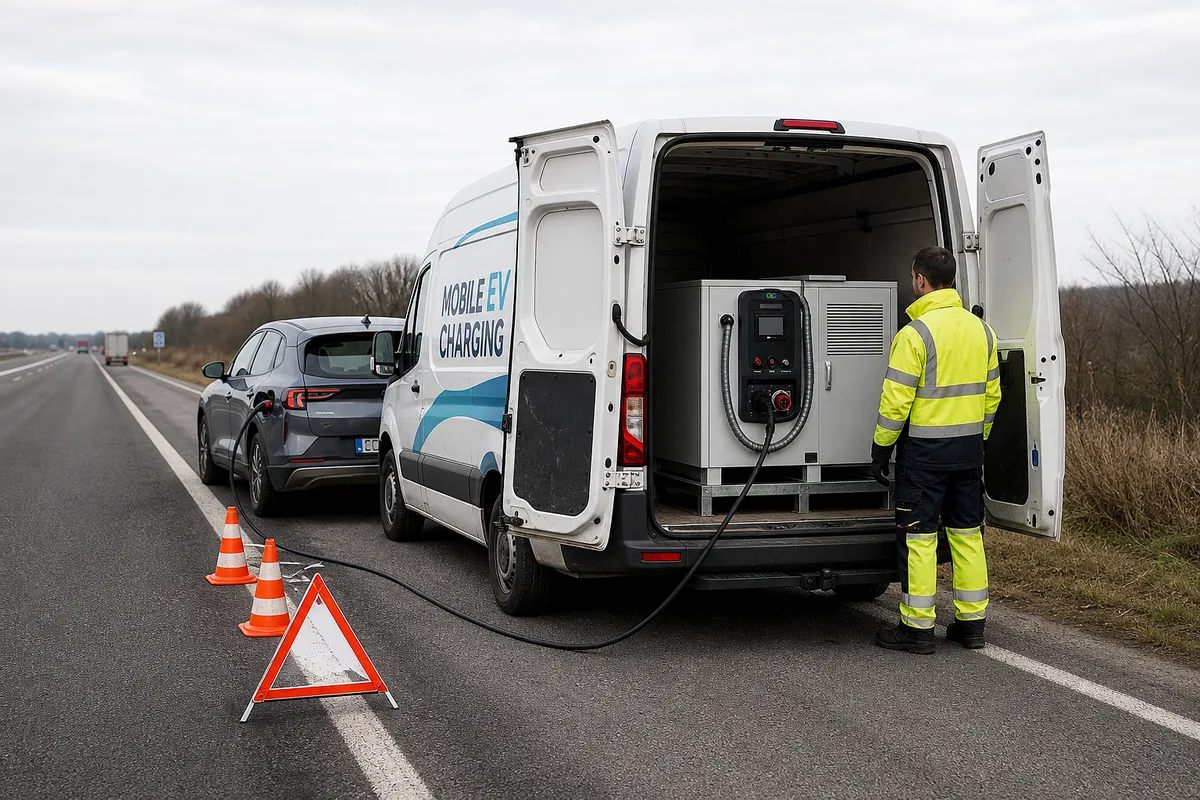
Destination market, vehicle model, connector, number of vehicles, daily energy demand and available input power allow a faster technical response.
It depends on calls per shift, energy delivered per vehicle, service radius and the reserve required for uncertain demand.
Most models can be configured for CCS1, CCS2, CHAdeMO, GB/T or NACS. Final compatibility is confirmed for the selected model and market.
Vehicle-mounted projects are possible after confirming payload, dimensions, ventilation, cable access and the vehicle integration plan.