Many parking spaces
Serve more spaces without dedicating equipment to every bay.
Move stored energy to vehicles in parking compounds, dealerships and controlled sites instead of installing a charger at every space.
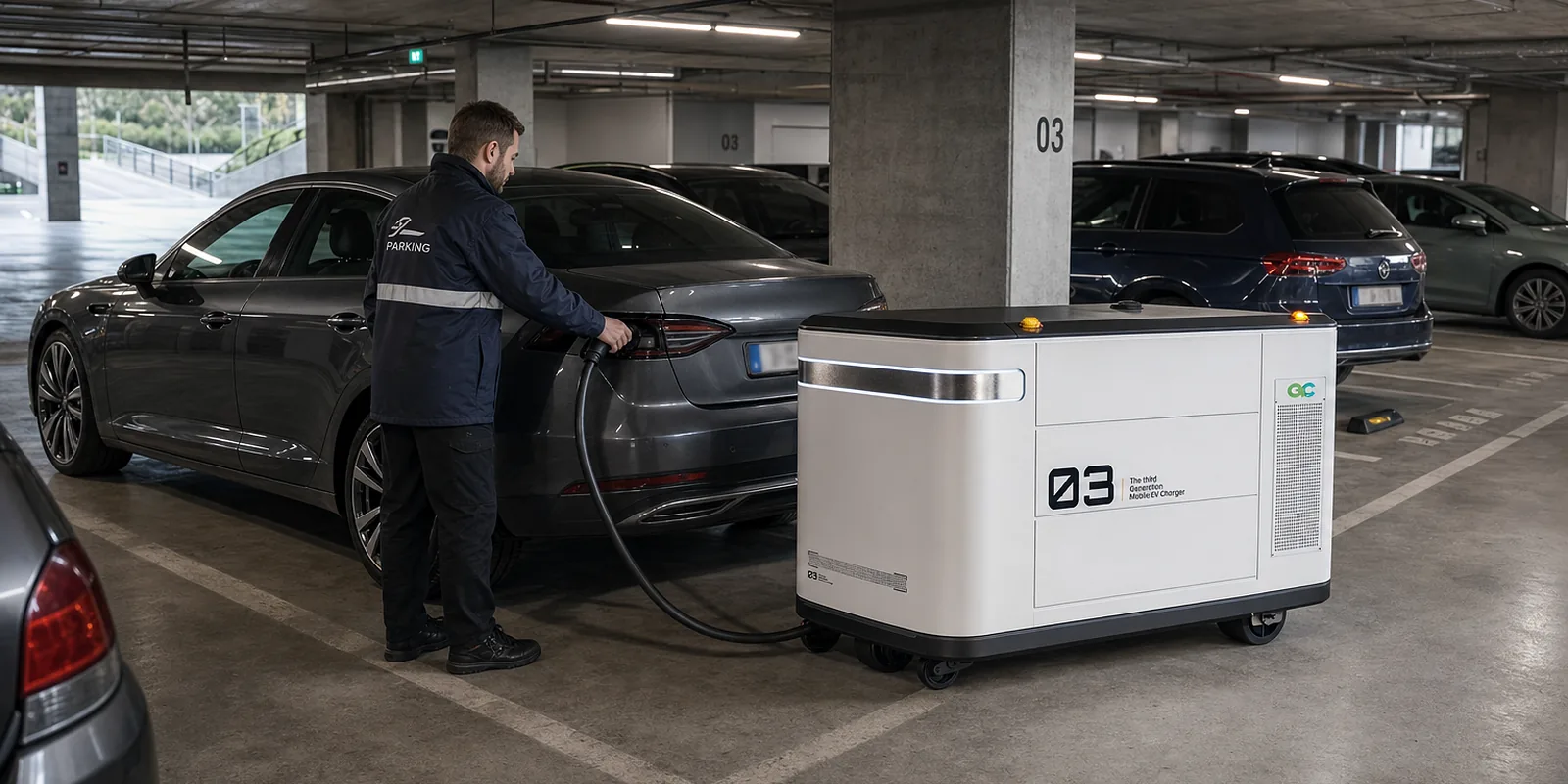
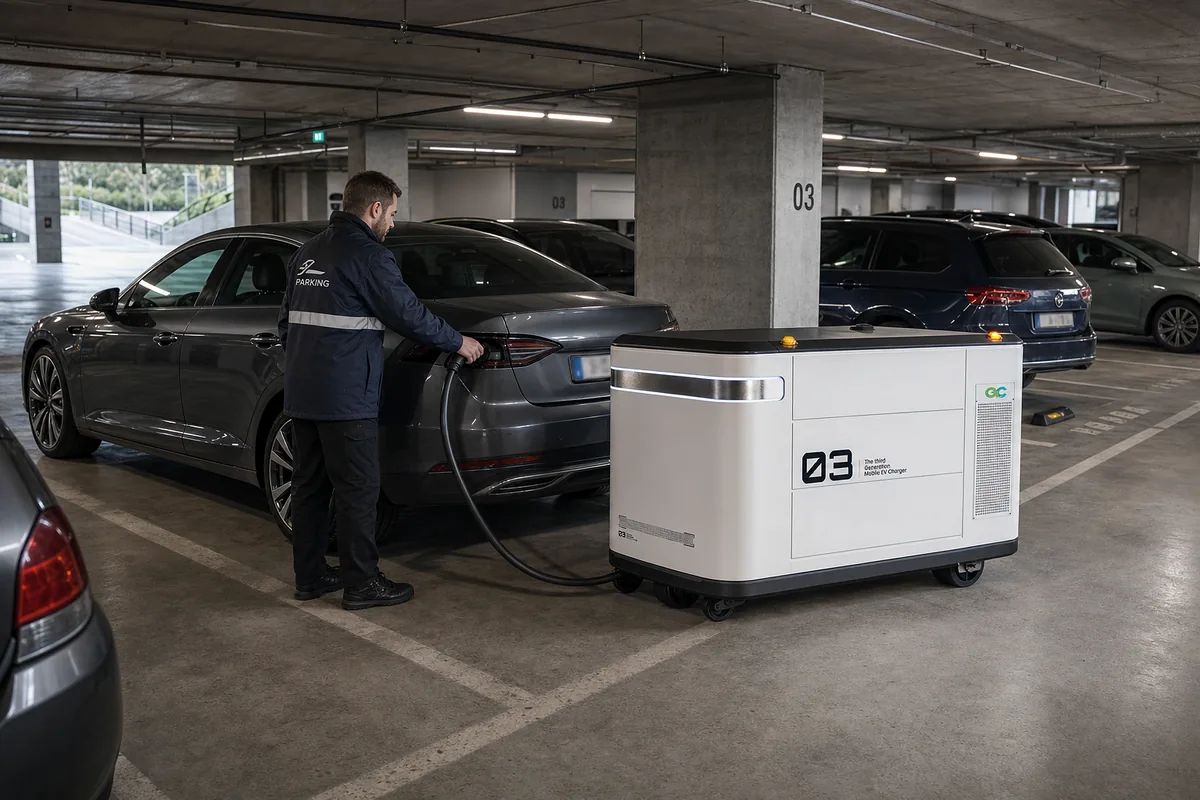
Large parking facilities may have many vehicles but only a limited number need charging at the same time. Moving stored energy to the vehicle can reduce the need to install a fixed charger at every parking space and can support lots where vehicle positions change frequently.
Movable and robotic configurations are best suited to controlled environments with defined routes, trained operators and a clear recharge location. The project review covers parking geometry, vehicle turnover, connector access, dispatch method and daily energy demand.
Compare the suggested configurations in our mobile EV charger catalog, then confirm the final specification with the project engineering team.
Correct sizing depends on when vehicles charge, how much energy they need and how the mobile system itself will be recharged.
Serve more spaces without dedicating equipment to every bay.
Bring charging to vehicles that are difficult to reposition.
Schedule a smaller number of mobile assets across the facility.
Supplement existing infrastructure during peak demand.
Combine an approved recharge source, integrated battery storage, DC fast charging outputs and optional OCPP-compatible communications.
These inputs turn a broad application idea into a configuration that can be checked against the selected equipment.
Aisle width, slopes, turning space and pedestrian routes.
Arrival, departure and dwell time by vehicle group.
Operator-controlled, scheduled or integrated robot operation.
Vehicles per day, energy per session and recharge availability.
These products are starting points. Final capacity, output, cable count and connector are confirmed after the duty-cycle review.
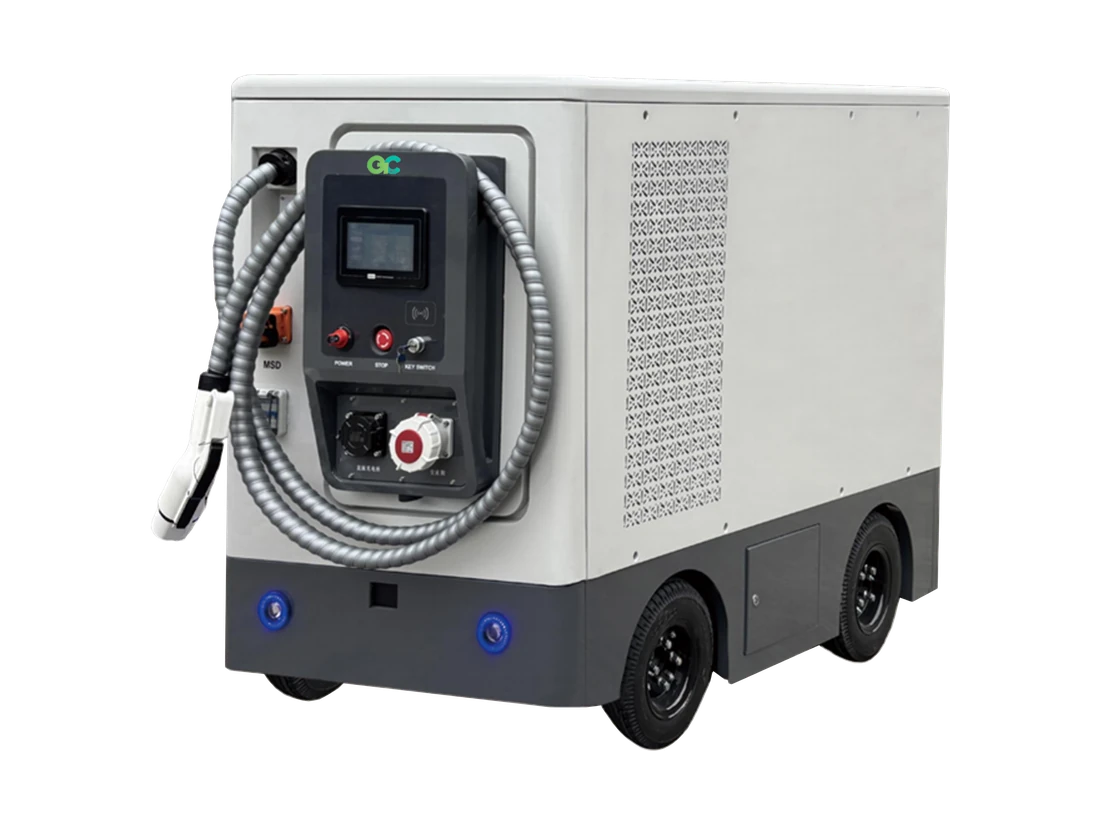
Destination market, vehicle model, connector, number of vehicles, daily energy demand and available input power allow a faster technical response.
They are intended for controlled sites after route, surface, obstacle, weather, communications and operating procedures are reviewed.
Yes. The asset can be scheduled between vehicles if daily energy and charging windows allow.
The 209 kWh robot is offered with CCS1 or GB/T, with NACS through an adapter where applicable. Other model options are confirmed separately.