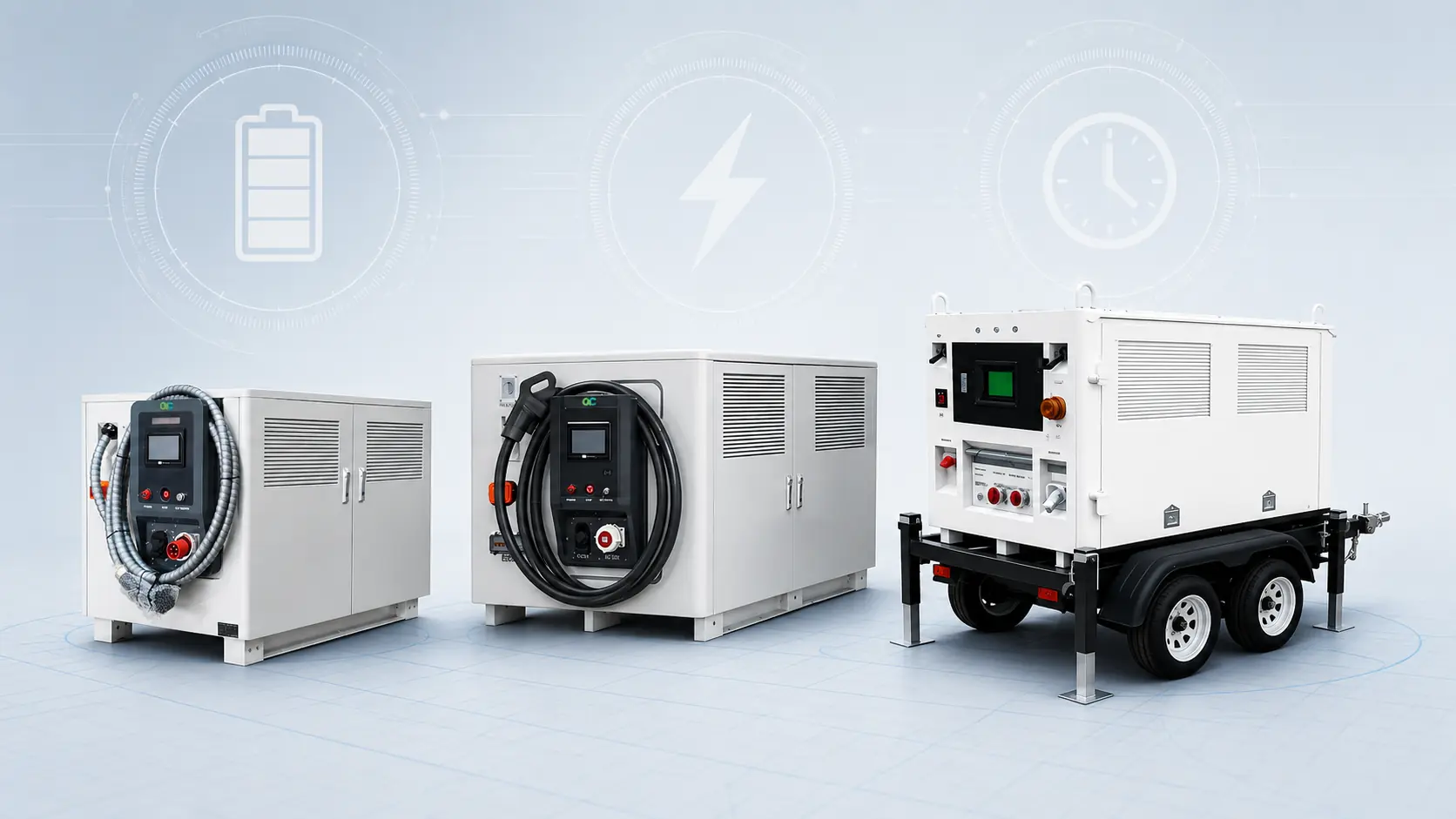
Featured Guide
How to Size a Mobile EV Charging System: kWh, kW and Charging Windows
A practical way to translate vehicle energy demand, dwell time and site input power into a mobile charging configuration.
Understand sizing, connectors, OCPP, deployment formats and the questions buyers should settle before ordering.

A practical way to translate vehicle energy demand, dwell time and site input power into a mobile charging configuration.
A practical way to translate vehicle energy demand, dwell time and site input power into a mobile charging configuration.
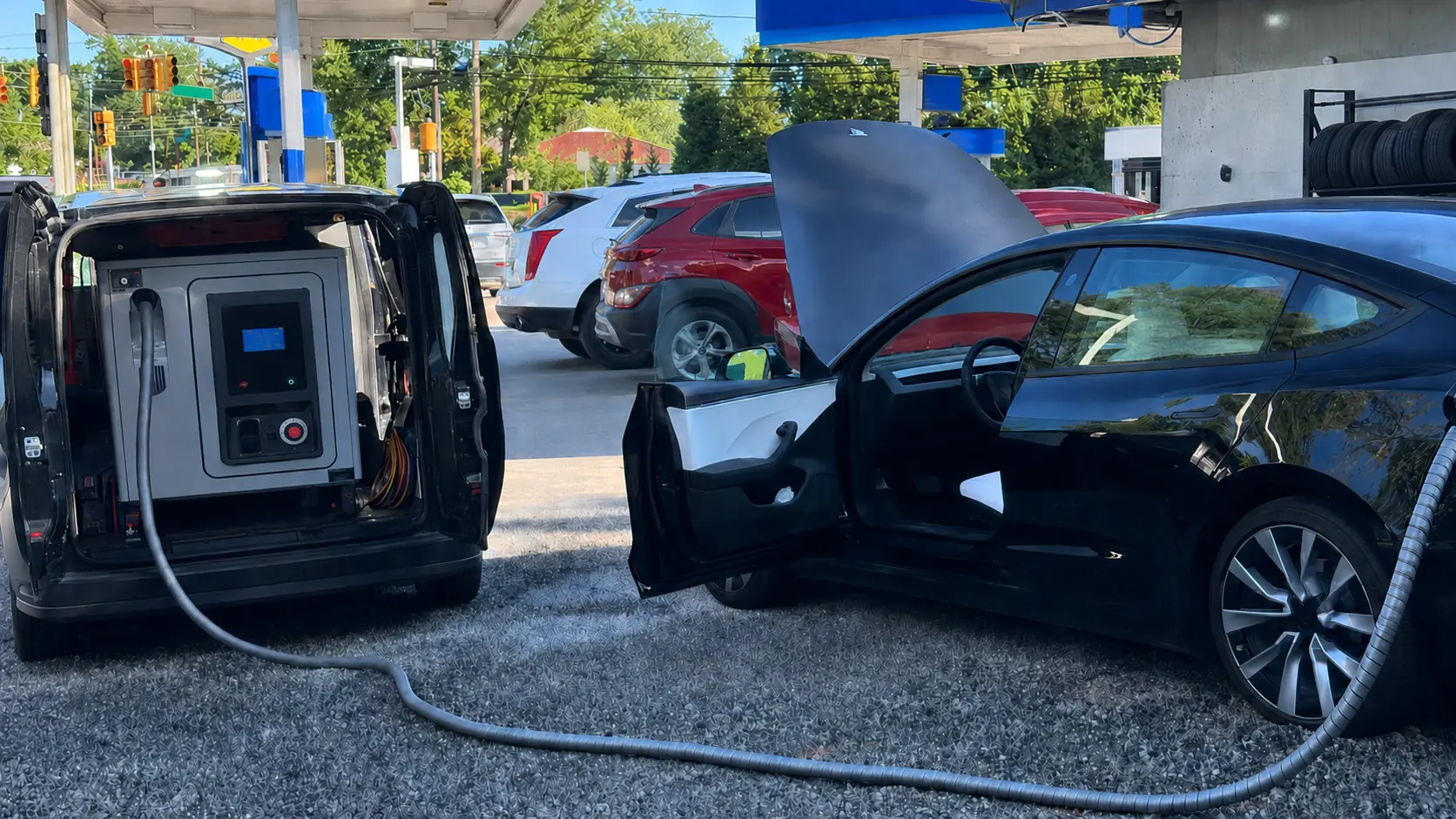
Connector mix, vehicle voltage, service radius and recharge logistics all affect the right roadside charging setup.
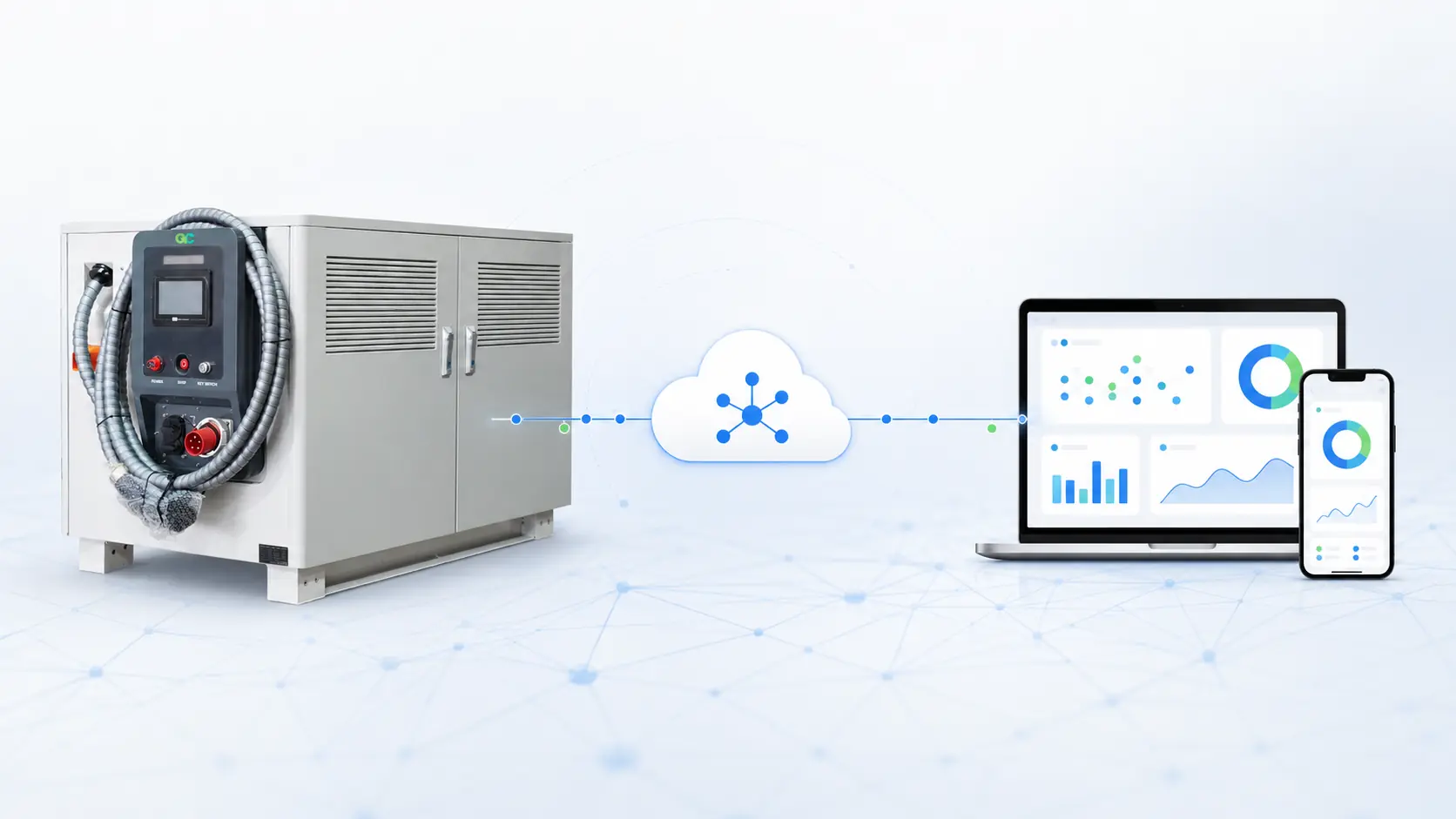
OCPP-compatible hardware is one layer; billing, mapping, remote diagnostics and user management depend on the selected operator platform.
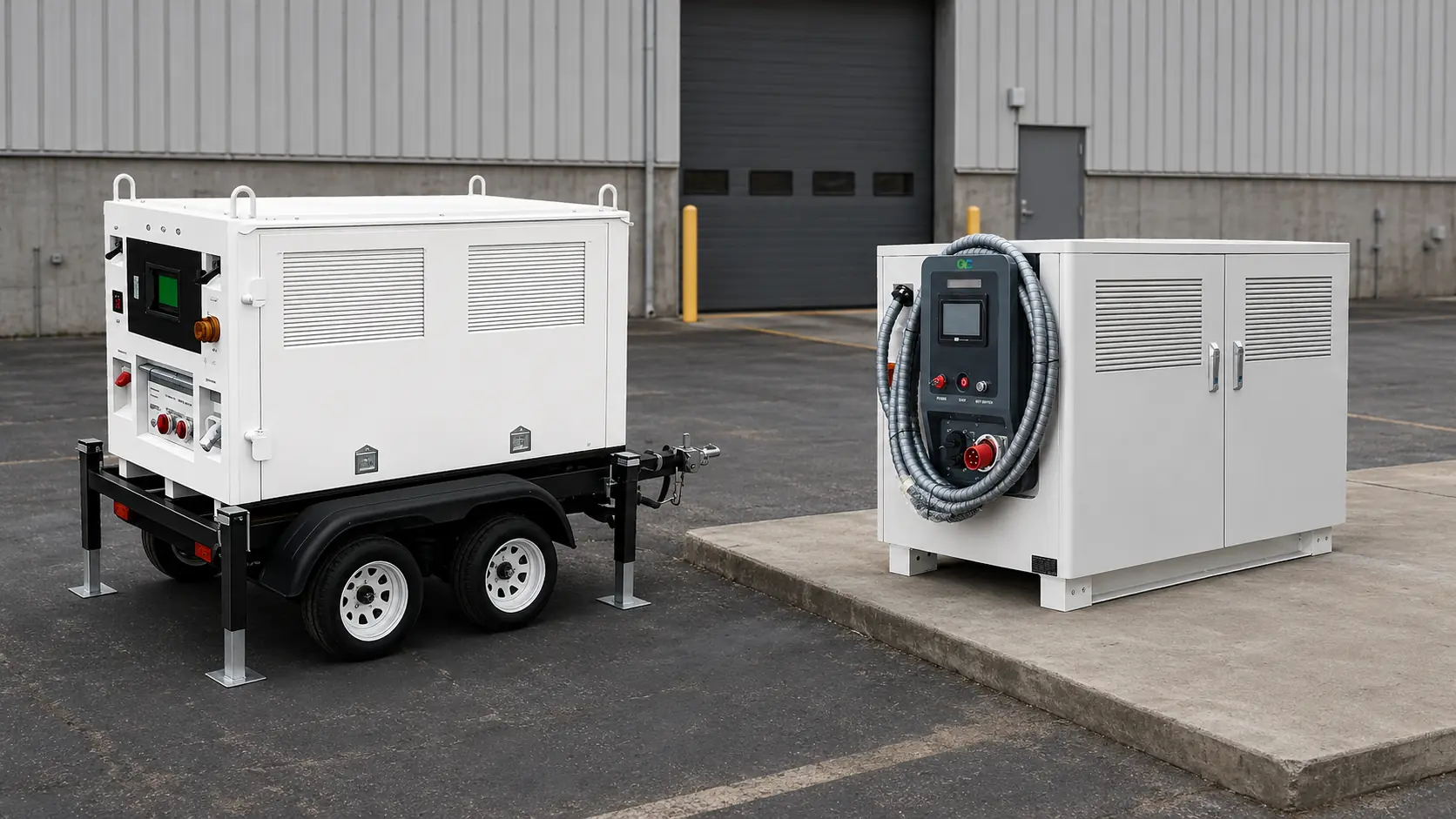
Compare towing, footprint, energy capacity and field workflow before choosing a deployment format.
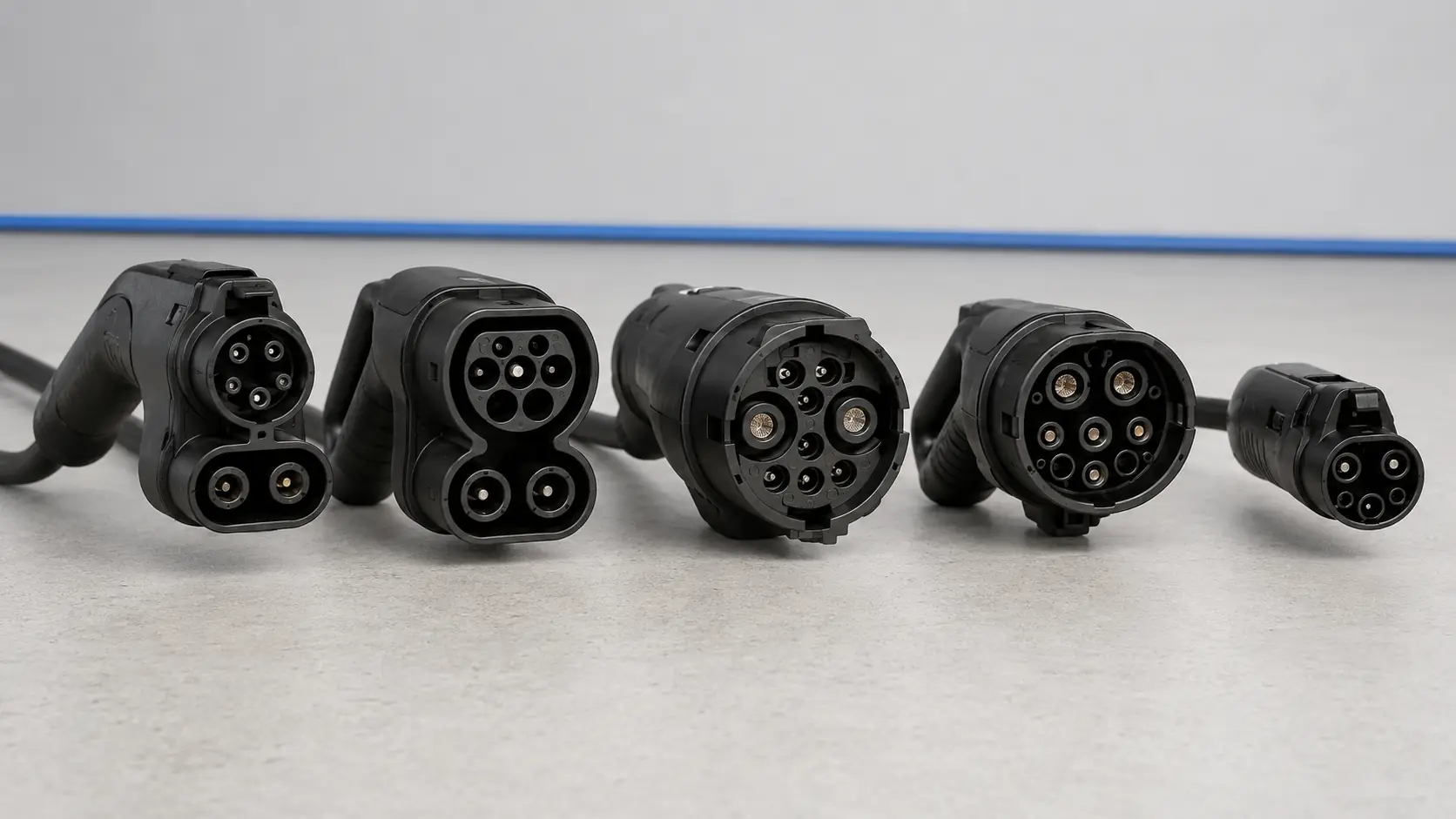
A destination-market connector plan prevents expensive cable and vehicle compatibility changes later.
Send the vehicle, connector, daily energy and available site input power.