Insufficient site power
Buffer a lower-power supply before higher-power vehicle charging.
Deploy charging capacity before a permanent connection is available or where the existing grid cannot support peak demand.
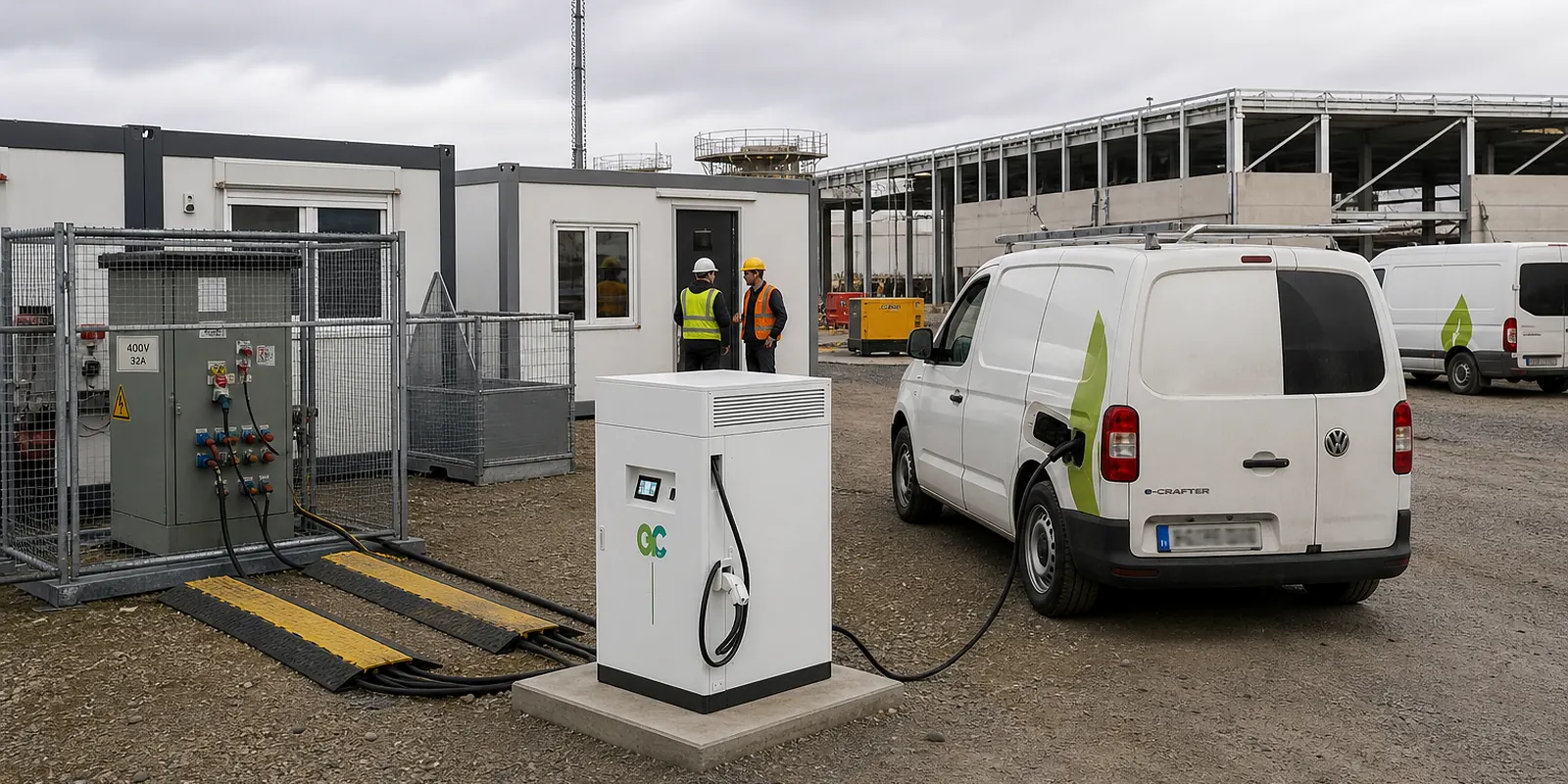
A site may have enough energy over a full day but not enough instantaneous power for the required charging window. Battery-integrated charging stores energy at a rate the site can support, then delivers higher-power DC charging when vehicles arrive.
This approach can serve new depots, temporary yards, construction phases and locations waiting for a utility upgrade. Sizing begins with the site input limit, vehicle arrival pattern, total daily energy and the time available for the system to recharge.
Compare the suggested configurations in our mobile EV charger catalog, then confirm the final specification with the project engineering team.
Correct sizing depends on when vehicles charge, how much energy they need and how the mobile system itself will be recharged.
Buffer a lower-power supply before higher-power vehicle charging.
Deploy capacity for seasonal, pilot or project-based operations.
Start charging before the permanent electrical works are complete.
Separate energy accumulation from the vehicle charging peak.
Combine an approved recharge source, integrated battery storage, DC fast charging outputs and optional OCPP-compatible communications.
These inputs turn a broad application idea into a configuration that can be checked against the selected equipment.
Available voltage, phase, current and permitted operating hours.
Arrival times, dwell time and whether charging overlaps.
Total kWh required plus an operating reserve.
Temporary use, relocation or integration with permanent infrastructure.
These products are starting points. Final capacity, output, cable count and connector are confirmed after the duty-cycle review.
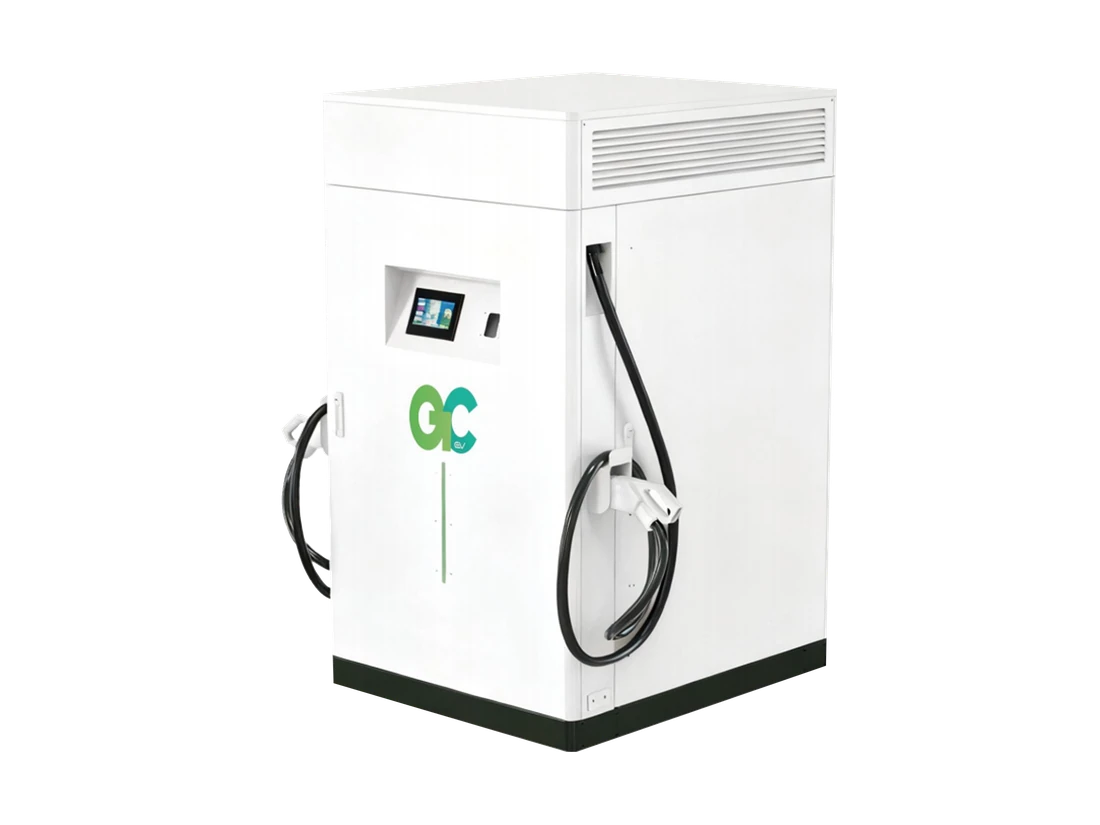
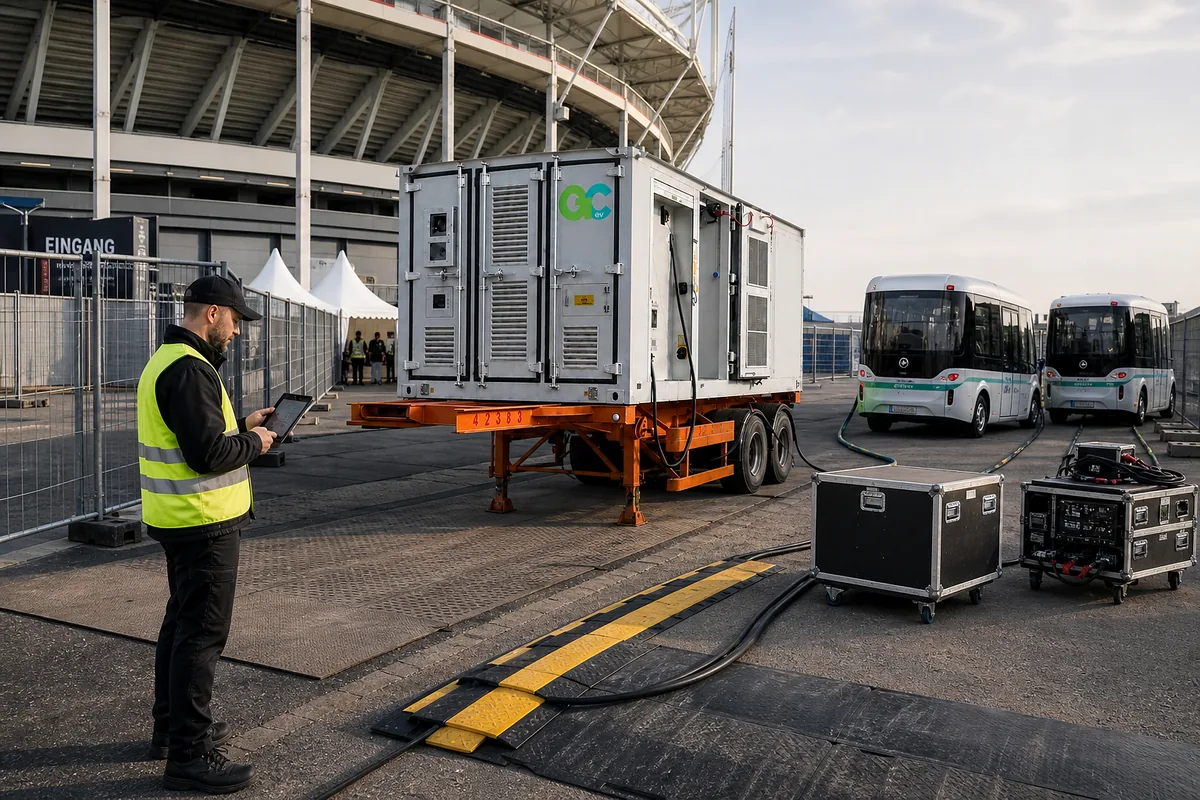
Destination market, vehicle model, connector, number of vehicles, daily energy demand and available input power allow a faster technical response.
Yes, when the system is sized so available input can restore the required energy before the next vehicle charging window.
It can provide temporary or supplemental capacity, but long-term suitability depends on daily energy demand, recharge time and operating cost.
Movable and trailer-mounted formats are designed for relocation, subject to transport, access and installation requirements.