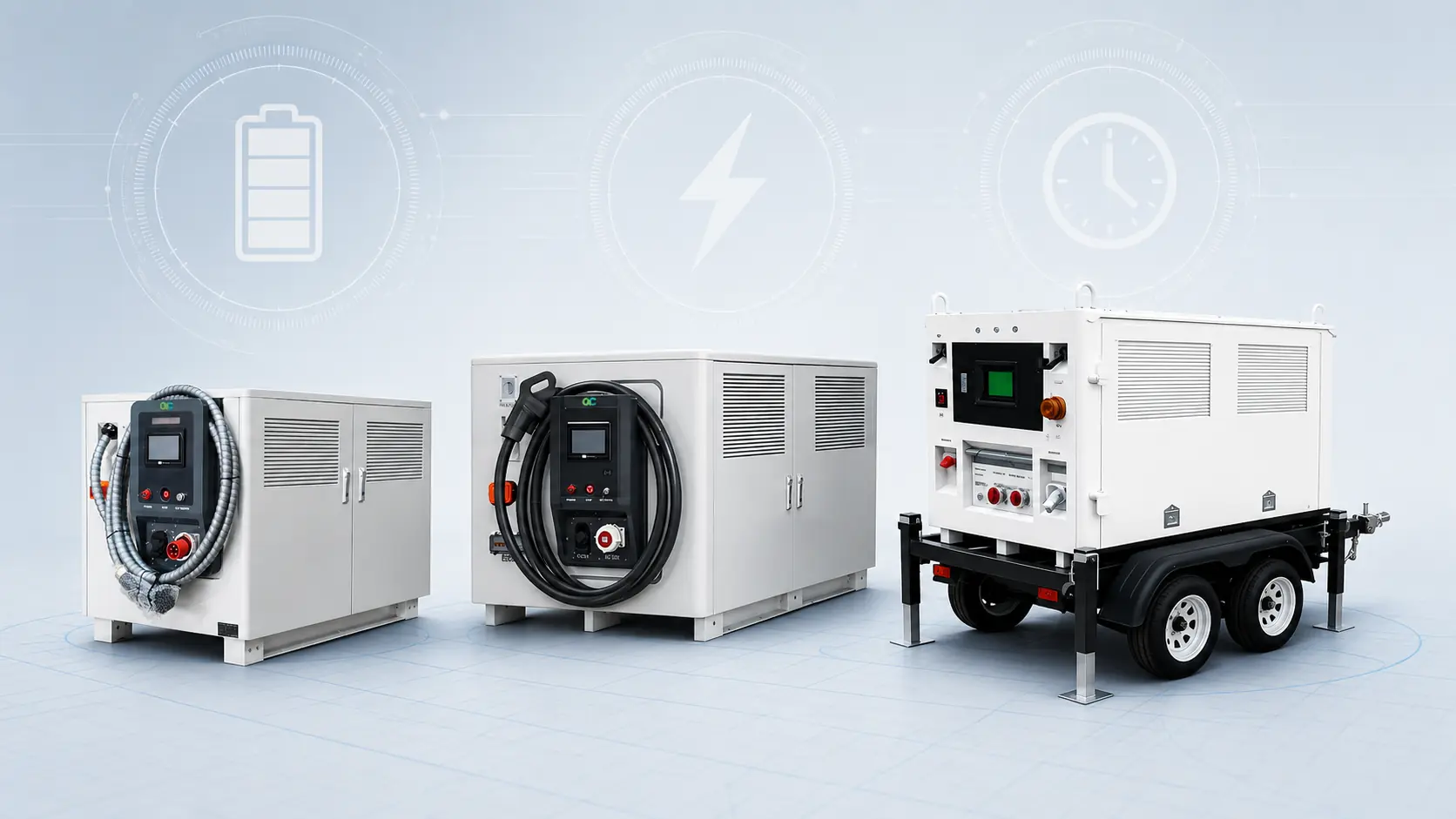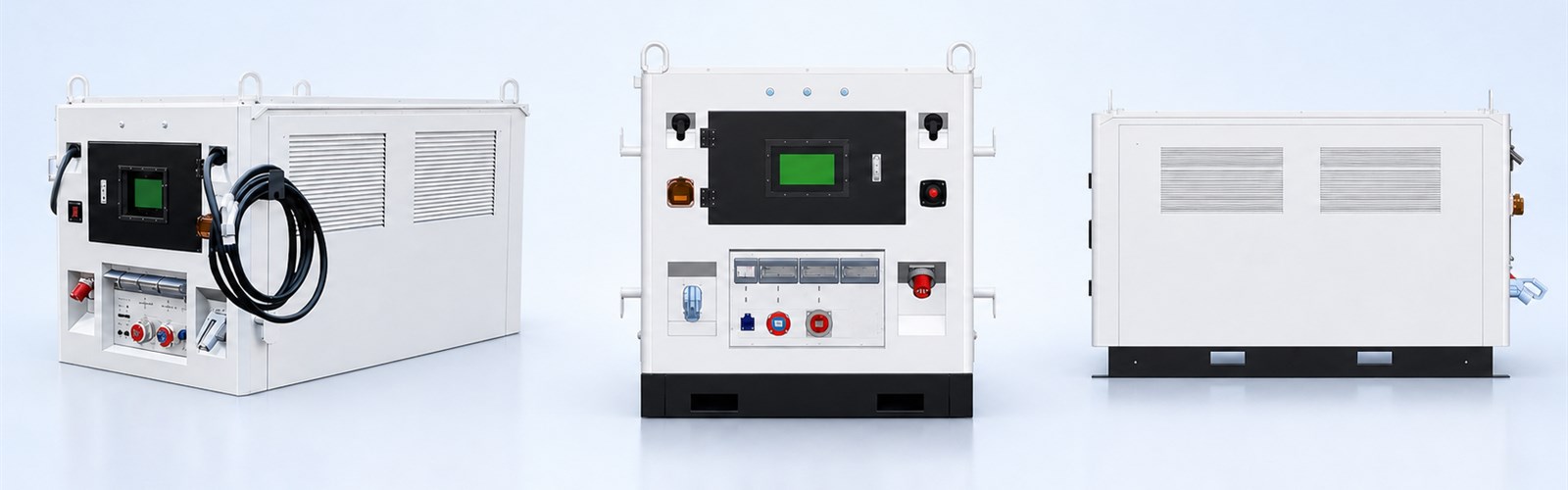
A mobile EV charging system is not selected by battery capacity or charger power alone. The equipment must also match the vehicles, daily energy demand, charging window, available recharge source, destination-market connector and deployment method.
That makes supplier evaluation different from buying a standard wall-mounted charger. A useful comparison should show how each supplier turns an operating requirement into an approved configuration, tests the finished equipment and supports delivery after the order.
This checklist is designed for fleet operators, roadside-assistance companies, charging service providers, airports, ports, construction projects and other buyers comparing battery-integrated mobile EV charging systems.
Recent enquiries from both the United Kingdom and United States reinforce the value of a market-specific procurement checklist. They do not prove keyword demand or market size, but they do show why a buyer should verify destination-market compliance, connector compatibility, import responsibilities and support scope before comparing prices.
1. Start With the Operating Cycle
Before comparing models, ask the supplier to review six inputs:
- vehicle models and battery sizes;
- required connector standard;
- number of vehicles that may charge at the same time;
- daily energy demand;
- available charging window; and
- available AC or DC input for recharging the mobile system.
These details help separate battery capacity in kWh from DC output in kW. Capacity determines how much usable energy is available, while output power influences how quickly that energy can be delivered to the vehicle. Both values must be considered together.
A supplier that immediately recommends the largest system without asking about the duty cycle may be creating unnecessary cost, weight and transport complexity. A system that is too small can create the opposite problem: insufficient daily energy or a charging window that cannot be met.
The U.S. Department of Energy's fleet guidance likewise recommends starting with vehicle duty, charging needs and site infrastructure. Use our mobile EV charging system sizing guide to prepare the energy and power inputs.
2. Confirm the Configuration in Writing
The quotation should identify more than a product name. Ask for written confirmation of:
- battery capacity and DC output;
- number of charging outputs and power allocation;
- connector type;
- recharge input and estimated recharge conditions;
- enclosure and environmental requirements;
- cable length and deployment format;
- communication hardware; and
- options that are included, excluded or subject to final engineering review.
For LiCharger projects, most equipment can be configured with CCS1, CCS2, CHAdeMO, GB/T or NACS according to the model and destination market. The 209 kWh mobile charging robot is offered with CCS1 or GB/T, with NACS available through an adapter where applicable. Final connector compatibility should always be confirmed against the target vehicle and market.
Compare the available formats in the mobile EV charger product range, then request a model-specific written configuration.
3. Separate OCPP Hardware From the Operator Platform
The Open Charge Alliance defines OCPP as communication between charging stations and charging-station management systems. “OCPP 1.6J hardware-ready” does not automatically mean that billing, SIM connectivity, mapping, a mobile app, user accounts, remote diagnostics or an operator subscription are included.
Ask the supplier to identify the supplied OCPP-capable hardware, local platform, network responsibilities, required data points, commissioning work and recurring service charges.
LiCharger can configure OCPP 1.6J-compatible hardware. Platform services require integration with a compatible local operator or software provider and should be agreed during project configuration. Read what OCPP 1.6J hardware-ready includes before comparing platform claims.
4. Review Market Compliance and Certification Scope by Model
Certification marks should never be treated as a general statement covering every product variation. Ask which report, certificate or test document applies to the exact model being quoted and whether configuration changes affect that scope.
LiCharger's confirmed documentation position is:
- CE documentation for all current equipment;
- UN38.3 documentation for all current equipment;
- MSDS documentation for all current equipment; and
- UL-related certification for the 209 kWh model only, including UL 1973, UL 2202 and UL 9540A within the confirmed supplier documentation scope.
Certification icons may be shown as a summary, but the applicable documents should be checked for the selected model before shipment.
For Great Britain, buyers should identify the economic operator and confirm which product-safety rules, conformity route, technical file, declaration and marking apply to the final configuration. Current UK government guidance recognises CE marking under covered product regulations alongside the UKCA route, but applicable requirements still depend on the product and market. For the European Economic Area, the European Commission explains that manufacturers must identify applicable legislation, assess conformity, prepare technical documentation and issue the declaration of conformity.
For the United States, ask which nationally recognised standards and listings apply to the exact charging equipment, battery system and installation. A standard number mentioned in a brochure is not the same as a model-specific listing or certification.
5. Define the Factory Acceptance Test
A factory acceptance test should be agreed before production is complete. The exact checklist depends on the model and project, but may include:
- visual and assembly inspection;
- battery and charger status checks;
- connector and cable inspection;
- charging-function verification;
- emergency-stop and protection checks;
- communication checks where applicable;
- output and load testing according to the agreed procedure; and
- review of labels, manuals and shipment documents.
Ask whether the supplier can provide photos, test records, a remote inspection or an in-person factory visit for qualified projects. Acceptance criteria should be documented before shipment. LiCharger's manufacturing, inspection and quality process explains the current owned-and-partner production model.
6. Compare Commercial Terms on the Same Basis
Two quotations are difficult to compare if they include different connectors, battery sizes, delivery terms or support scopes. Compare the confirmed configuration, MOQ, lead time, documentation, delivery term, commissioning, training, spare parts and warranty exclusions.
LiCharger's current commercial policy is a minimum order quantity of one unit, a standard-product lead time of approximately 45 days and a two-year whole-unit warranty. Custom-product lead time is confirmed after the configuration is approved. OEM/ODM, color and logo options are available following engineering review. Replacement parts damaged after the warranty period are charged separately.
7. Check Project Support Before and After Delivery
Mobile charging projects often involve transport, placement, recharge planning and local integration. The supplier should explain who supports pre-order review, export documents, deployment guidance, remote commissioning, operator training, troubleshooting and spare-parts identification.
Support claims should be specific. “Global support” is more useful when the quotation states the available remote-support method, required local contractor work and responsibilities after the warranty period.
For temporary depot or phased-infrastructure projects, review the fleet charging planning guide before agreeing responsibilities.
8. Ask for Evidence Without Exposing Customer Information
Relevant evidence can include equipment photos, factory inspections, anonymized deployment descriptions and approved case results. Customer names, vehicle registration numbers and unapproved performance figures should remain confidential.
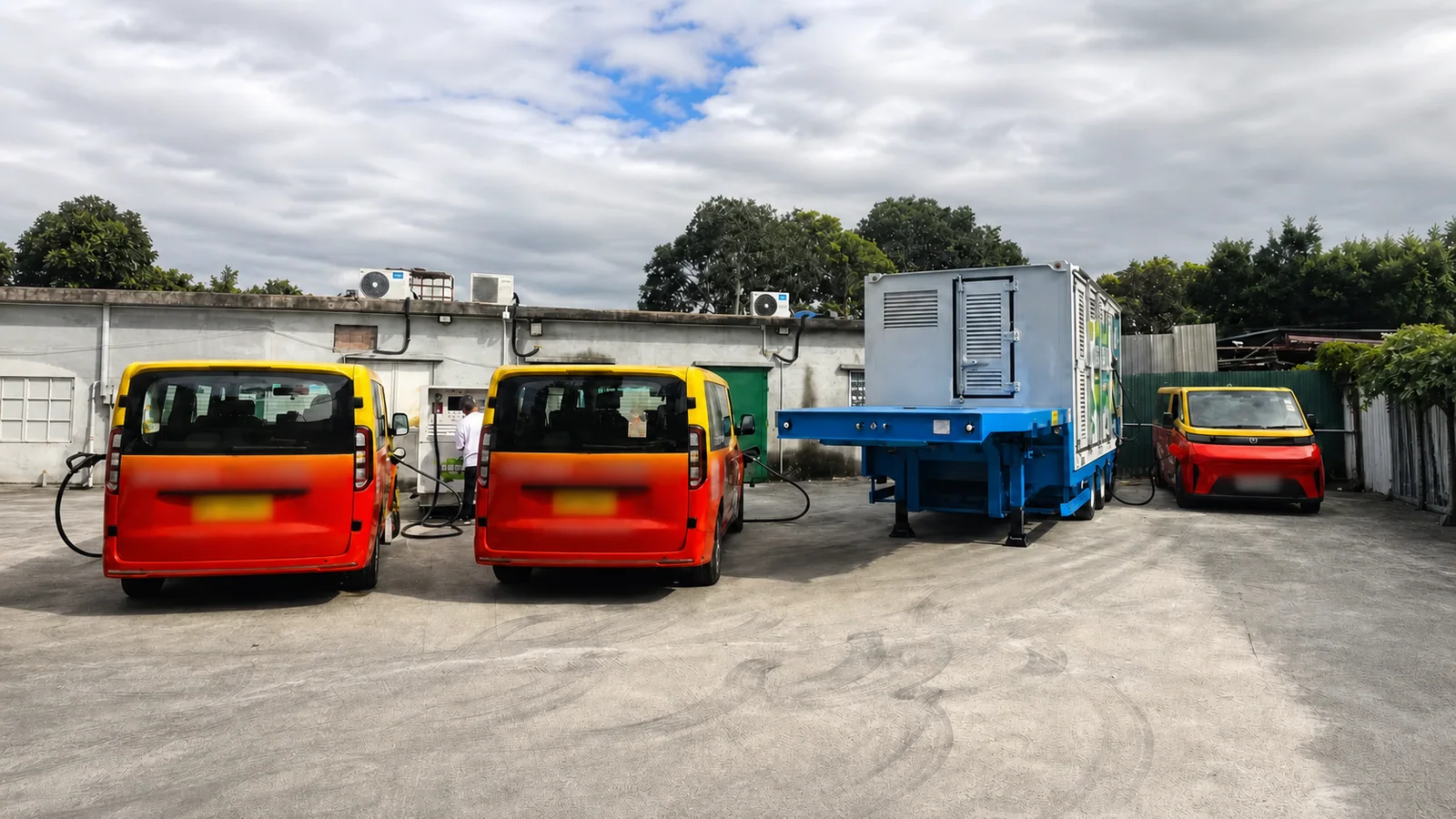
When reviewing a case study, compare the operating problem rather than only the photograph. Useful details include the destination country, application, equipment configuration, number of vehicles, charging window and the reason a mobile system was selected.
Supplier Evaluation Checklist
Before placing an order, confirm that the supplier has provided:
- a duty-cycle review;
- a written equipment configuration;
- connector and vehicle compatibility confirmation;
- a clear OCPP and platform boundary;
- model-specific certification scope;
- agreed factory acceptance criteria;
- comparable commercial terms;
- shipment and commissioning responsibilities; and
- warranty and spare-parts terms.
Frequently Asked Questions
What information should I send before requesting a mobile EV charger quotation?
Send the destination country, vehicle models, connector type, number of vehicles, energy required per operating cycle, available charging window, available recharge input, site conditions, preferred deployment format and required delivery date. These inputs let the supplier compare capacity, output and recharge recovery instead of selecting by headline power alone.
Is OCPP 1.6J hardware-ready the same as an OCPP-certified charging network?
No. OCPP describes communication between a charging station and a charging-station management system. Hardware readiness does not automatically include an operator platform, SIM service, billing, mapping, mobile application or OCA certification. Ask for the protocol version, certification status and integration responsibilities separately.
Does a CE mark prove that every product option is approved for the UK or EU?
No. EU guidance states that the manufacturer is responsible for identifying applicable legislation, completing the conformity assessment, preparing technical documentation and issuing the declaration of conformity. UK obligations also depend on the target market and final product. Confirm documents against the exact model and configuration, and obtain local compliance advice where required.
What should a factory acceptance test include?
There is no single checklist for every mobile charging system. The purchase specification should define the agreed visual, functional, protection, connector, communication, output and documentation checks, together with acceptance criteria and evidence. Confirm whether the review will be in person, remote or record-based before production is completed.
Should I compare suppliers only by kWh, kW and price?
No. Compare the complete approved configuration and lifecycle responsibilities: connector count, recharge input, transport format, market documentation, FAT, delivery term, commissioning, training, software boundary, warranty exclusions and spare-parts support. Otherwise, two quotations may describe materially different projects.
Plan the Project Before Selecting the Model
The best starting point is not “What is your biggest charger?” It is “What must the charging system accomplish during one operating cycle?”
Send the vehicle model, connector, number of vehicles, daily energy demand, charging window, available recharge input, destination and required delivery date. LiCharger can then compare suitable mobile DC fast charger, trailer-mounted, fixed battery-integrated, robot and high-capacity configurations.